You are here: Home / Town Happenings / Join the World's Largest Swimming Lesson June 26
Join the World's Largest Swimming Lesson June 26
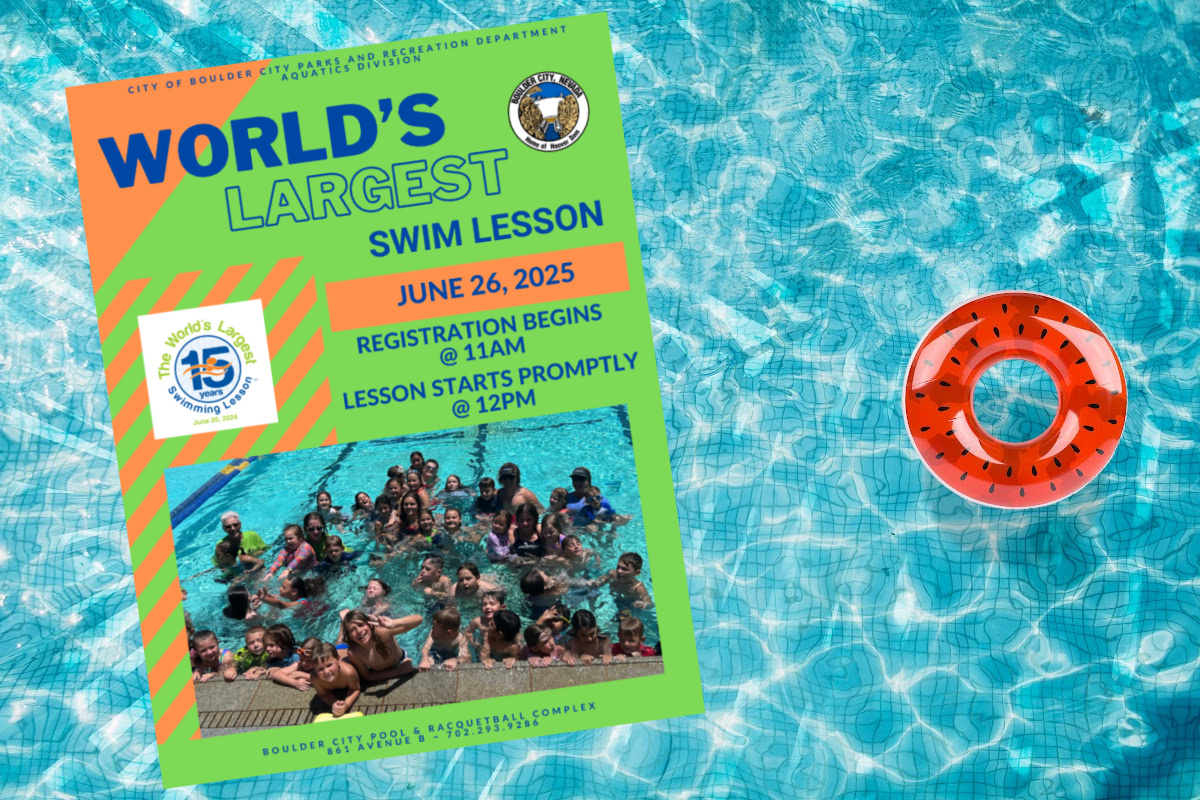
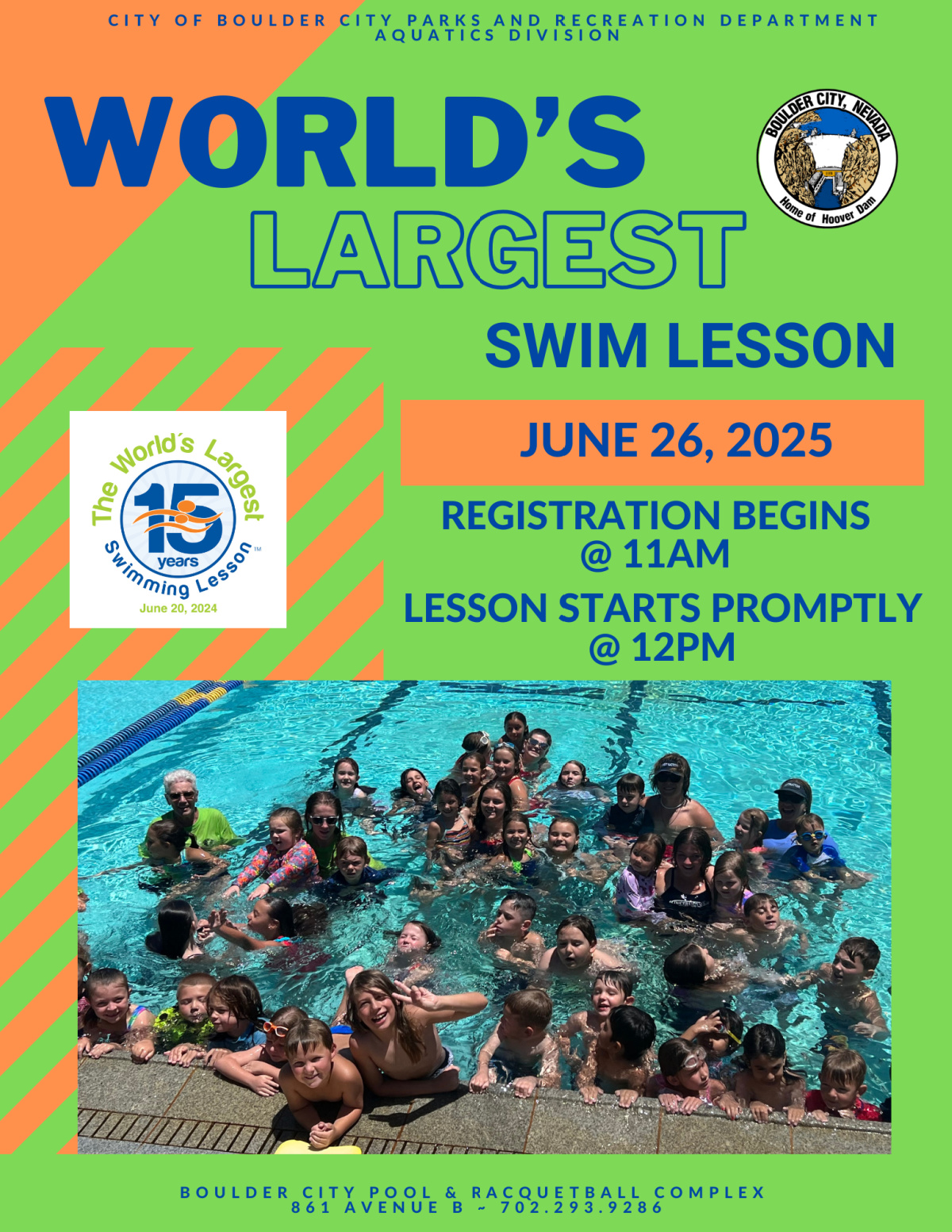
On Thursday, June 26 from 12:00PM to 1:00PM, swimmers from Boulder City will join with tens of thousands of other swimmers around the world in the 16th Annual World's Largest Swimming Lesson™️ (WLSL). The event is open to children and adults of various skill levels. The purpose of the event is to raise awareness of water safety. This event is held at an estimated 600 locations in over 20 countries across six continents. Tens of thousands of people have participated in the 15 years. There is no cost to participate. Adults – especially parents – can learn more about the WLSL.org by clicking HERE. Registration at the pool begins promptly at 11:00AM.
In the United States, drowning is the leading cause of unintended, injury related death of children ages one to four and the second leading cause of accidental death for children under fourteen. Research in this area has shown that the risk of drowning decreases 88% among children ages one to four in those who take formal swimming lessons, like the ones offered at the Boulder City Municipal Pool, located at 861 Avenue B.
Some additional water safety tips include:
- Never leave children alone in and around water. Give young swimmers 100% of your attention during water play. Designate a spotter a parties whose sole job is to monitor what is happening in and around the pool to reduce the likelihood of tragedies.
- Have young or inexperienced swimmers wear USCG approved life jackets around the water. Do not solely rely on life jackets to prevent drowning!
- Make sure pools and spas have appropriate safety measures like childproof fencing, pool alarms, rescue equipment and that the pool is clean and safe from hazards.
- Learn what to do in an emergency, including CPR.
- More pool and water safety tips can be found HERE.
According to the American Red Cross, water competency skills have increased significantly in the US. in the past eight years, jumping from 46% to 56% of people possessing key, lifesaving water competency skills in 2025. “The American Red Cross and the other National Water Safety Month Coalition members encourage everyone to be water smart to help prevent drowning,” said William D. Ramos, MS, PhD, member of the Red Cross Scientific Advisory Council and chair of its Aquatics Sub-Council. “Being water smart means being safer in, on and around water, learning how to swim and knowing what to do in a water emergency.”